

Table of Contents
About BMNS
BMNS is a Costa Rica-based nearshoring company that provides comprehensive, end-to-end HR solutions that extend beyond traditional EOR and BPO models. As a company headquartered in Costa Rica, with leadership deeply connected to the country, including our COO and Managing Partner, we bring a unique, firsthand understanding of the local business landscape, culture, and talent market. We believe that people are the driving force behind business growth, which is why we take a people-first approach to talent and workforce management. By partnering closely with our clients, we help them achieve their strategic objectives through tailored hiring solutions and exceptional talent acquisition support.
Overview
Costa Rica has established itself as one of the leading nearshore hiring destinations in Latin America. The country offers a stable democracy, strong institutions, high literacy rates, and a business-friendly environment that has attracted multinational employers for decades. Costa Rica is particularly known for its talent in technology, finance and accounting, customer support, engineering, shared services, and business operations. Its alignment with U.S. business hours, strong English proficiency, and extensive experience supporting international organizations make collaboration seamless for North American teams. Given the strong infrastructure and talent pool, Costa Rica is generally considered a premium nearshore destination and ranks around the more expensive countries in LATAM. For organizations seeking a long-term nearshore hiring strategy, Costa Rica offers a unique combination of talent quality, workforce stability, and regulatory transparency.
| Category | Detail |
|---|---|
| Capital | San José |
| Population | Approximately 5.2 million people (2026 estimate) |
| Currency | Costa Rican Colón (CRC). Exchange rates fluctuate, but as of August 2026, US$1 ≈ ₡450 Costa Rican Colones (CRC). |
| Language | Spanish (official language). English proficiency is among the strongest in Central America, particularly among professionals. |
| Working Hours | Standard workweek is up to 48 hours per week, typically 8 hours per day, with a minimum 30-minute to one-hour meal/rest break. |
| Vacation | Minimum of 2 weeks after every 50 weeks worked for the same employer. |
| Public Holidays | 11 public holidays annually. Certain holidays require special pay if worked. |
| Time Zone | Central Standard Time (UTC -6), providing strong overlap with U.S. business hours. No daylight savings. |
| Literacy Rate | Approximately 98%. |
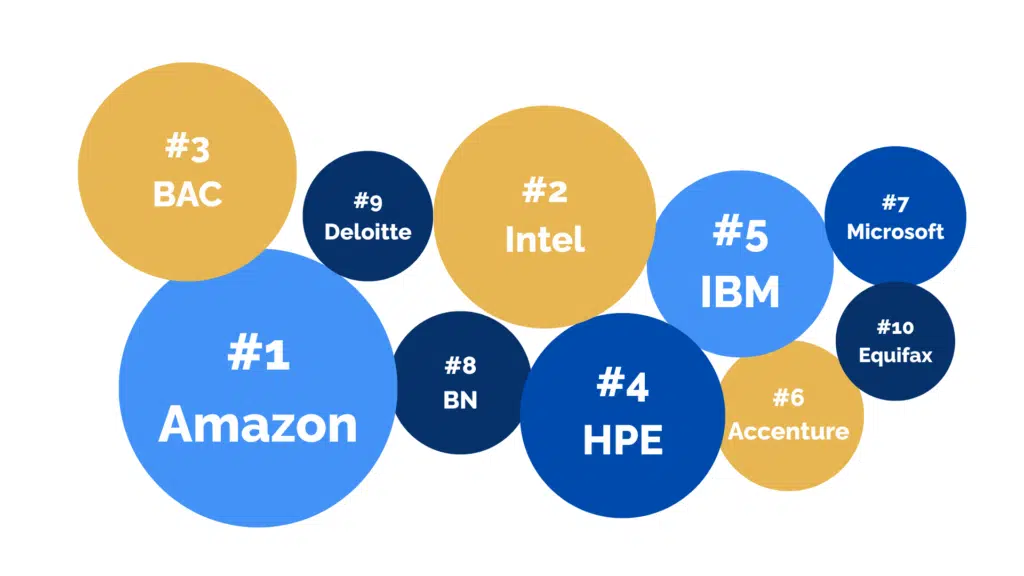
Largest Employers & Labor Market Influencers
Talent Market
Costa Rica’s education system is widely recognized as one of the strongest in Central America and has helped establish the country as a premier destination for nearshore talent. The combination of strong public universities, private institutions, and multinational investment has created a workforce with significant exposure to international business environments.
#1 - University of Costa Rica (UCR)
Primary Areas: Engineering, Business, Sciences, Healthcare, Law.
Widely considered Costa Rica’s leading public university, UCR is the country’s highest-ranked university and the top-ranked institution in Central America. It produces graduates across engineering, science, healthcare, law, and business disciplines. Many leaders in Costa Rica’s public and private sectors are UCR alumni.
#2 - Technological Institute of Costa Rica (TEC)
Primary Areas: Engineering, Technology, Software Development, IT.
TEC is one of the country’s premier institutions for engineering and technology education and is consistently recognized as Costa Rica’s leading technical university. It plays a significant role in supplying talent to Costa Rica’s growing technology sector and multinational employers.
#3 - National University (UNA)
Primary Areas: Business, Education, Environmental Sciences, Social Sciences.
UNA is known for strong programs in education, environmental sciences, business, and social sciences. The university contributes substantially to Costa Rica’s professional workforce and public sector talent pipeline.
#4 - Latin University (ULATINA)
Primary Areas: Business, Education, Environmental Sciences, Social Sciences.
UNA is known for strong programs in education, environmental sciences, business, and social sciences. The university contributes substantially to Costa Rica’s professional workforce and public sector talent pipeline.
#5 - Latin University of Science & Technology (ULACIT)
Primary Areas: Engineering, Technology, Software Development, IT.
TEC is one of the country’s premier institutions for engineering and technology education and is consistently recognized as Costa Rica’s leading technical university. It plays a significant role in supplying talent to Costa Rica’s growing technology sector and multinational employers.
Understanding Employee Law, Benefits & Compliance
Costa Rica is known for having one of the most employee-protective labor systems in Latin America. Employers must comply with statutory benefits, social security requirements, termination regulations, and employee protections established under the Costa Rican Labor Code and administered primarily through the Ministry of Labor and Social Security (MTSS) and the Costa Rican Social Security Fund (CCSS). Companies hiring in Costa Rica should understand these obligations before onboarding employees to ensure ongoing compliance.
Aguinaldo
The Aguinaldo is a mandatory annual bonus paid to all employees working in Costa Rica. It must be paid no later than December 20 each year and is calculated by totaling all ordinary and extraordinary wages earned between December 1 and November 30 and dividing that amount by 12.
If an employee earns a fixed salary of ₡1,200,000 per month and works, the full calculation period:
Total annual earnings: ₡14,400,000.
Aguinaldo: ₡14,400,000 ÷ 12 .
Aguinaldo payment: ₡1,200,000
Paid Vacation
Employees are entitled to a minimum of two weeks of paid vacation after every 50 weeks worked for the same employer. If employment ends before reaching 50 weeks, employees are generally entitled to a proportional vacation payout. Vacation is considered a protected labor right and should generally be taken rather than continually accumulated.
Public Holidays
Costa Rica observes 11 public holidays annually, including New Year’s Day, Juan Santamaría Day, Labor Day, Annexation of Nicoya, Independence Day, and Christmas Day. Employees are generally entitled to paid time off on mandatory public holidays. If an employee works on a mandatory paid holiday, they are generally entitled to receive double pay (2x their normal rate) for the hours worked. Employers should verify holiday observance requirements annually, as some holiday observances may be modified by government regulation.
Sick Leave
Employees who are unable to work due to illness may qualify for sick leave benefits through a combination of employer and CCSS support. Medical documentation is generally required, and payment obligations may vary depending on the duration and nature of the leave.
Maternity & Paternity Leave
Female employees are entitled to four months of paid maternity leave, generally consisting of one month before the expected birth and three months following childbirth. During this period, employees receive their full salary, with 50% funded by the employer and 50% funded by the Costa Rican Social Security Fund (CCSS). Employees are also entitled to job protection and statutory benefits throughout their maternity leave. Costa Rica also provides two paid days of paternity leave per week during the first four weeks following a child’s birth, for a total of eight paid days of paternity leave.
C.C.S.S.
Employers must register employees with the Caja Costarricense de Seguro Social (CCSS) and make required payroll contributions that fund healthcare, pensions, disability programs, maternity benefits, and other social protection programs. While contribution rates can change periodically, employers should generally budget approximately 26% to 27% of an employee’s gross salary in mandatory employer contributions. Employees typically contribute approximately 10.5% to 11% of their gross salary through payroll deductions. Employers should also budget for statutory employment accruals, including paid vacation and potential severance obligations under Costa Rican labor law.
Termination Requirements
Costa Rica offers a well-established labor framework that balances employee protections with a stable and business-friendly environment. Employers must comply with statutory benefits, social security requirements, termination regulations, and other obligations established under the Costa Rican Labor Code and administered primarily through the Ministry of Labor and Social Security (MTSS) and the Costa Rican Social Security Fund (CCSS). Companies hiring in Costa Rica should understand these requirements before onboarding employees to ensure ongoing compliance and support a successful employment relationship.
Notice Periods
Costa Rican labor law requires notice periods based on an employee’s length of service. If notice is not provided, compensation in lieu of notice is generally required More than 3 months, and less than 6 months: 1 week. More than 6 months, and less than 1 year: 2 weeks. 1 year or more: 1 month. Employers may elect to provide payment in lieu of notice rather than requiring employees to work through the notice period.
Severance
Employees terminated without just cause may be entitled to severance pay, known as Cesantía. The amount depends on the employee’s tenure and is calculated according to formulas established under Costa Rican labor law. Additional obligations may include proportional Aguinaldo, unused vacation, and notice payments where applicable.
Protected Employees
Costa Rican labor law provides enhanced protections for certain employee groups, including pregnant employees and other categories protected under labor legislation.
Employers should exercise caution and seek guidance before taking adverse employment actions involving protected employees.
Relevant Government Institutions
M.T.S.S.
C.C.S.S.
B.C.C.R.
Ministerio del Trabajo y Seguro Social (Ministry of Labor and Social Security)
The primary authority responsible for labor regulations, labor inspections, and employment compliance.
Caja Costarricense de Seguro Social (Costa Rican Social Security)
The institution responsible for administering Costa Rica’s healthcare, pension, and social security systems.
Banco Central de Costa Rica (Costa Rican Central Bank)
Provides official exchange rates and economic information relevant to employers and payroll planning.
Legal Disclaimer
This guide is provided for educational purposes only and should not be considered legal advice. Employment laws, social security rates, tax requirements, and public holiday regulations may change. Employers should consult qualified legal advisors and local workforce experts before making employment decisions. BMNS recommends verifying current requirements through the appropriate government authorities and local employment specialists.
BMNS' Local Hiring Insights
#1
Costa Rica has one of the most mature and employee-protective labor environments in Latin America.
#5
Many international employers partner with local experts to navigate recruiting, payroll administration, compliance, and employee lifecycle management efficiently.
#2
Experienced bilingual professionals often evaluate benefits packages as closely as they evaluate compensation.
#6
Candidates increasingly prioritize remote and hybrid work opportunities, particularly within the Greater Metropolitan Area.
#3
Professional development opportunities remain highly valued, particularly among technology and finance professionals.
#7
Private healthcare coverage remains one of the most attractive supplemental benefits for experienced professionals.
#4
Understanding statutory benefits and payroll contributions upfront is critical for accurate workforce budgeting.
#8
Costa Rica is one of the more expensive labor markets in Latin America due to its high educational attainment, English proficiency, and strong multinational presence.
Frequently Asked Questions
Can a foreign company hire employees in Costa Rica without establishing a local legal entity?
Foreign companies may have options through structures such as an Employer of Record (EOR) or other compliant local employment solutions. Companies should consult legal and employment experts before hiring.
What is the mandatory Aguinaldo in Costa Rica?
The Aguinaldo is a mandatory annual payment generally equal to one-twelfth of an employee’s eligible earnings during the calculation period and must typically be paid by December 20 each year.
How many vacation days are employees entitled to in Costa Rica?
Employees are entitled to a minimum of two weeks of paid vacation after completing fifty weeks of work with the same employer.
What social security obligations do employers have in Costa Rica?
Employers must register employees with the CCSS and make required payroll contributions that support healthcare, pensions, disability coverage, maternity benefits, and other statutory programs.
Is severance pay required in Costa Rica?
Employees terminated without just cause may be entitled to severance pay (Cesantía), as well as other final payments such as accrued vacation, proportional Aguinaldo, and applicable notice payments. The amount depends on the employee’s length of service and the circumstances of the termination.
Sources
Government & Institutional Sources
- Instituto Nacional de Estadística y Censos (INEC)
- Ministerio de Trabajo y Seguridad Social (MTSS)
- Caja Costarricense de Seguro Social (CCSS)
- Banco Central de Costa Rica (BCCR)
Referenced Sources
- Costa Rica en Cifras 2025 (INEC) [admin.inec.cr]
- INEC Population Estimates & Projections [peopleofco…tarica.com], [inec.cr]
- Costa Rican Labor Code and Vacation Guidelines [salariocr.com], [illizeo.com]
- Aguinaldo Regulations and Guidance [aglegal.com], [finiquitojusto.com]
- Employment Benefits and Labor Compliance References [costarica-…ration.com]
- Termination, Notice Period, and Severance References [finiquitojusto.com]
Planning to Hire in Costa Rica?